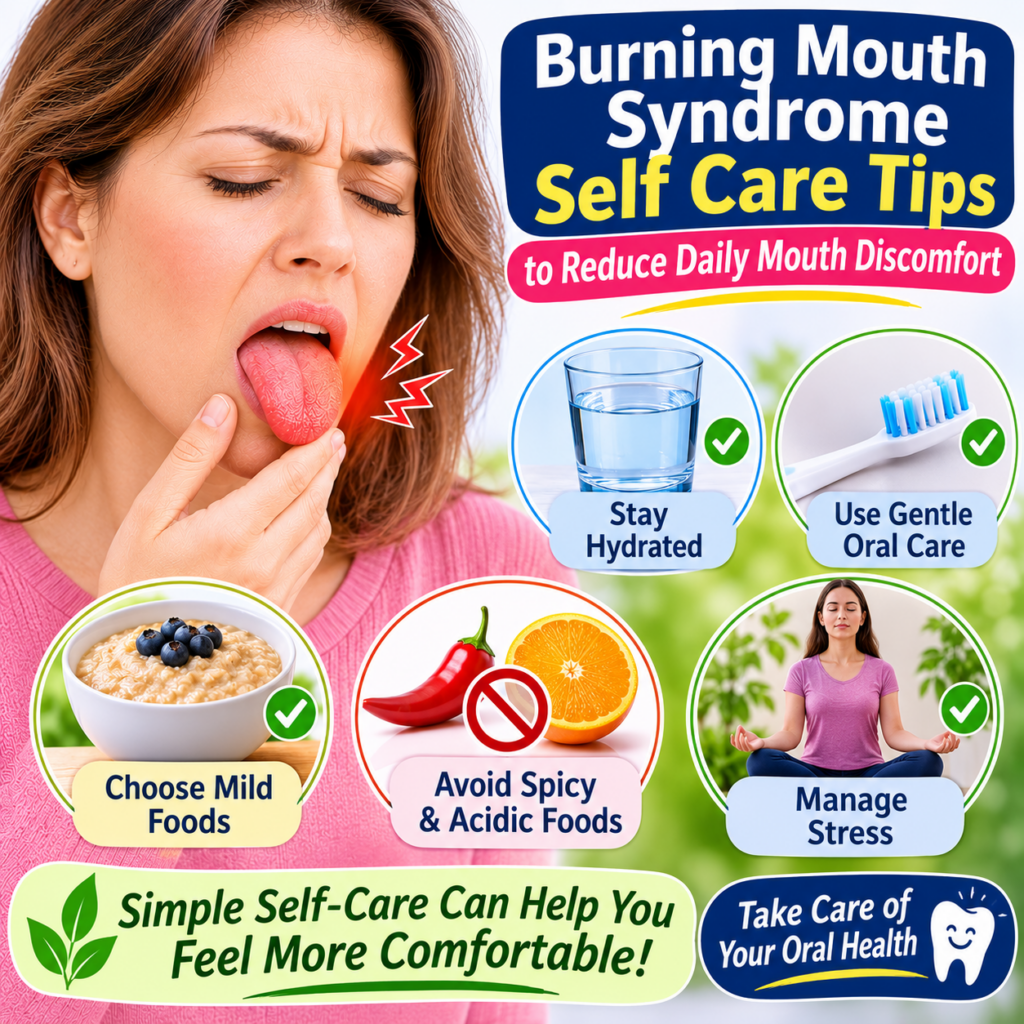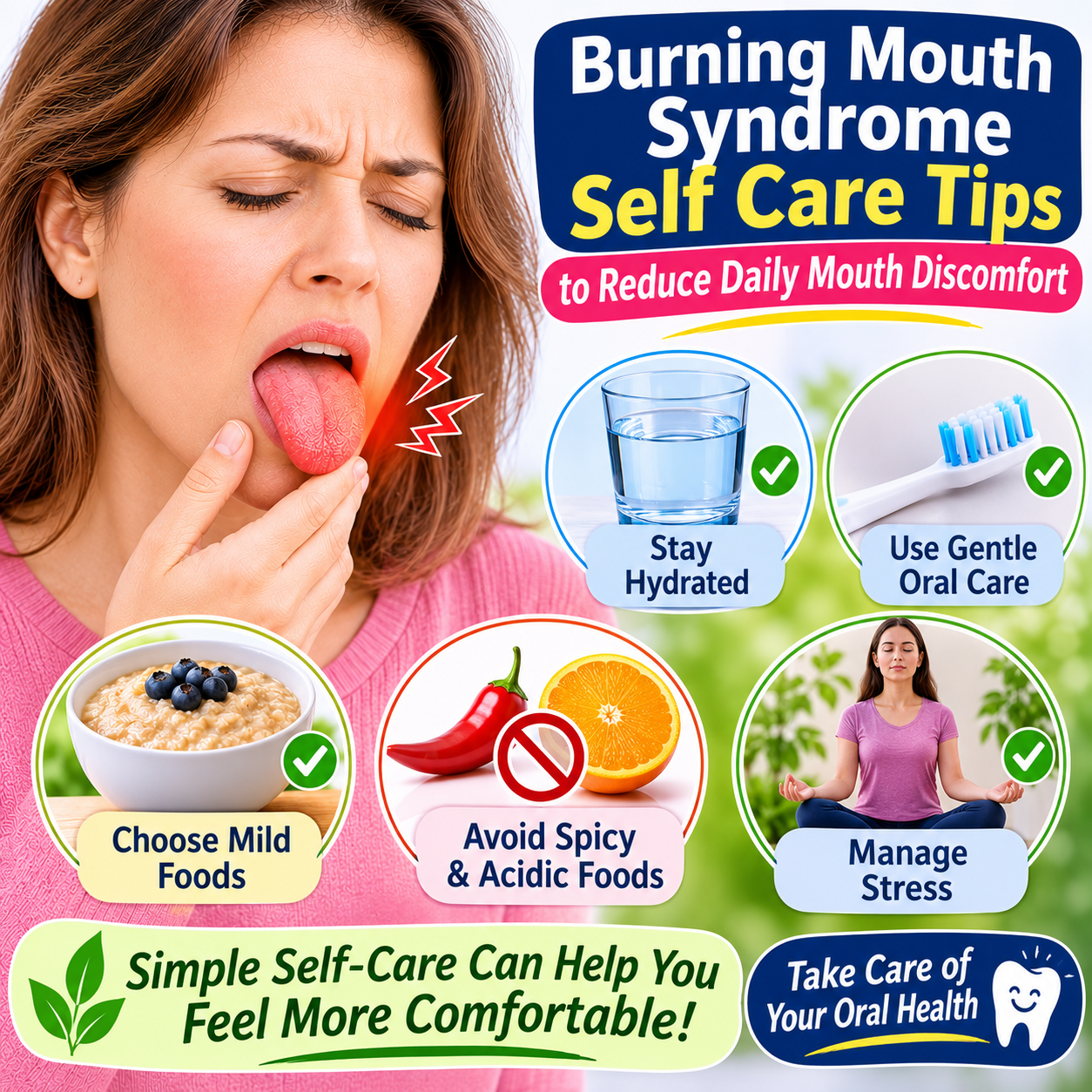
Burning mouth syndrome self care can make everyday discomfort easier to manage, especially when burning, tingling or a scalded feeling returns without an obvious cause. Simple changes to oral hygiene, food choices, hydration and stress management may reduce irritation and help you feel more comfortable. However, self-care does not replace a dental or medical assessment. Persistent mouth burning can have several causes, and finding the reason is an important part of choosing effective treatment.
What Is Burning Mouth Syndrome?
Burning mouth syndrome (BMS) is ongoing or recurring pain that feels like burning, scalding, tingling or numbness inside the mouth. It commonly affects the tongue, lips, gums, palate or inner cheeks. Some people also notice dry mouth or a bitter, metallic or altered taste. Symptoms may be present when waking, develop during the day or fluctuate over time.
In primary BMS, the discomfort is not explained by a visible oral problem or another identified condition. Secondary burning mouth symptoms are linked to an underlying issue, such as oral thrush, dry mouth, nutritional deficiency, irritation, allergy or a medication effect. These forms need different approaches. Treating the underlying cause may improve secondary symptoms, while primary BMS usually requires a longer-term symptom management plan.
Start With a Dental or Medical Assessment
Do not assume that every burning sensation is BMS. A dentist or doctor can examine your mouth and review your health history, medicines and oral care routine. Depending on your symptoms, they may consider blood tests, an oral swab, saliva assessment, allergy testing or other investigations. These checks can help identify problems that need specific treatment.
Mention when the discomfort began, where it occurs, whether it changes after eating and whether you have dry mouth or taste changes. Bring a list of prescription medicines, over-the-counter products and supplements. Do not stop a prescribed medicine yourself, even if you suspect it is contributing. Ask your prescribes whether a review or alternative is appropriate.
1. Keep Your Mouth Comfortably Moist
Dryness can make mouth discomfort feel worse. Sip cool or room-temperature water regularly rather than waiting until you feel thirsty. Keep a bottle nearby and take small sips throughout the day. If cold drinks soothe your mouth, use them when needed, but avoid very hot beverages that may increase irritation.
Sugar-free chewing gum or sugar-free lozenges may encourage saliva production. Choose products without strong mint, cinnamon or acidic flavoring if these trigger symptoms. If your mouth remains persistently dry, ask a dentist or pharmacist about saliva substitutes or moisturizing gels. These products can provide temporary comfort, although the best option depends on the reason for dryness.
Ice chips may briefly cool the mouth. Let small pieces melt slowly rather than chewing hard ice, which can damage teeth. Avoid adding lemon or other acidic ingredients to water for flavour, as acidity may aggravate sensitive oral tissues.
2. Identify Foods That Trigger Burning
There is no single diet that suits everyone with BMS. Some people find that spicy foods, chilli, pepper, hot sauces and heavily seasoned meals increase burning. Others react to acidic foods and drinks, including citrus fruit, tomatoes, vinegar, fizzy drinks and some fruit juices. Very salty, crunchy or rough foods may also irritate a sensitive mouth.
Keep a food and symptom diary for one or two weeks. Record what you eat, when discomfort begins and how long it lasts. Look for repeated patterns rather than removing many foods after one uncomfortable meal. If a particular item consistently triggers symptoms, reduce it or choose a gentler alternative.
Try soft, mild meals when symptoms are active. Porridge, rice, yoghurt, eggs, steamed vegetables and non-acidic soups may be easier to tolerate, depending on your individual triggers. Allow food to cool before eating. Avoid extreme temperatures and take smaller bites. Maintain a balanced diet; unnecessary restriction can make it harder to obtain essential nutrients.
3. Choose Gentle Oral Care Products
Toothpaste, mouthwash and dental products can irritate some people. Strong mint, cinnamon flavoring, whitening agents and certain foaming ingredients may be uncomfortable for sensitive mouths. Consider a mild, flavour-free toothpaste or one designed for sensitive teeth. Some people prefer a product without sodium laurel sulphate, but responses vary, so discuss persistent irritation with your dentist.
Brush twice daily with a soft-bristled toothbrush and gentle pressure. Clean along the gumline without scrubbing the tongue or oral tissues aggressively. Use a non-alcohol mouthwash only if it feels comfortable and your dentist recommends it. Alcohol-based rinses can worsen dryness or irritation in some people.
Avoid repeatedly changing several products at once. Introduce one change at a time and observe whether it helps. If a toothpaste or rinse causes immediate burning, stop using it and ask a dental professional for a suitable alternative.
4. Avoid Tobacco and Alcohol
Smoking, vaping and chewing tobacco can irritate the mouth and affect oral health. Alcohol may also aggravate burning, while alcohol-containing mouthwashes can increase dryness. Avoiding these products is a practical step for protecting the oral tissues and reducing possible triggers.
Alcoholic drinks are not the only concern. Check mouthwash labels for alcohol and choose an alcohol-free option if a rinse is needed. If stopping tobacco or alcohol is difficult, ask a healthcare professional about confidential support and evidence-based ways to reduce or quit. A gradual plan with appropriate help can be more realistic than relying on willpower alone.
5. Manage Stress Without Blaming Yourself
Stress does not mean that mouth pain is imaginary. Persistent discomfort can be influenced by nerve sensitivity, and stress may make symptoms harder to cope with or more noticeable. Pain itself can also create worry, disturb sleep and affect mood. Relaxation is therefore a supportive part of self-management, not a claim that anxiety is the sole cause.
Try a daily routine that feels achievable. Slow breathing, gentle stretching, meditation, prayer, yoga or a quiet walk may help settle tension. Relax your jaw and avoid clenching your teeth. If you notice that you press your tongue against your teeth or repeatedly check the painful area, gently redirect your attention.
Cognitive behavioural therapy or support from a clinician experienced in chronic pain may help some people develop coping strategies. Seeking this support does not suggest that symptoms are “all in your head”. It recognises that long-lasting pain affects both physical comfort and emotional wellbeing.
6. Support Better Sleep and Daily Habits
Poor sleep can make pain more difficult to manage. Aim for a regular bedtime and waking time, and create a calm wind-down routine. Reduce late caffeine if it affects your sleep, and avoid smoking or alcohol as sleep aids. Keep water nearby if you wake with a dry mouth.
Plan meals and activities around your symptom pattern. If discomfort tends to increase later in the day, schedule demanding tasks earlier when possible and keep soothing drinks available. Take breaks during long conversations if talking aggravates your mouth. These adjustments can preserve energy without requiring you to stop normal activities.
7. Consider Natural Remedies Carefully
People often search for Natural Remedies for Burning Mouth Syndrome because they want gentle ways to feel better. The safest starting points are simple measures with reasonable clinical support: cool water, ice chips, sugar-free gum, avoiding known irritants and choosing mild oral care products. These approaches may provide temporary relief, but they do not cure every form of BMS.
Be cautious with herbal rinses, essential oils, concentrated plant extracts and homemade mixtures. “Natural” does not automatically mean safe for oral tissues. Some ingredients can cause allergies, irritation or interactions with medicines. Do not apply undiluted essential oils, strong alcohol-based tinctures, lemon juice, vinegar or abrasive powders to the tongue or gums.
If you are considering supplements, first ask whether a deficiency has been identified. Taking high doses of vitamins or minerals without testing may be unnecessary or harmful. A clinician can advise whether tests for iron, vitamin B12, folate, zinc or other factors are appropriate based on your history.
Herbal Care Products may be part of a broader interest in plant-based wellness, but no brand or herbal product should be presented as a proven BMS treatment without reliable clinical evidence. Check ingredients, avoid products that sting, and discuss them with a dentist or pharmacist before use, particularly if you take regular medicines or have allergies.
8. Make Eating and Drinking More Comfortable
When your mouth is sore, small practical changes can make meals easier. Choose foods with a soft texture and moderate temperature. Add moisture to dry meals with a mild sauce or broth, provided the ingredients do not trigger symptoms. Eat slowly and pause between bites. If a food causes burning repeatedly, note it in your diary and discuss suitable alternatives with a dietitian if your diet becomes limited.
Avoid using very hot tea or coffee to soothe the mouth. Let drinks cool first. If caffeine seems to worsen symptoms or dryness, try reducing intake and compare how you feel. Do not assume that every beverage is a trigger; individual responses differ.
9. Track Symptoms and What Helps
A short daily record can make appointments more useful. Note the time symptoms start, affected areas, severity, dryness, taste changes, meals, oral products, stress and sleep. Record any measures that help and how long the relief lasts. A simple rating from zero to ten can show whether symptoms are changing over several weeks.
Bring the diary to your dentist or doctor. It may reveal patterns that are difficult to remember during an appointment. Avoid checking your mouth constantly or measuring every small sensation, as this can increase worry. A brief, consistent record is more useful than monitoring all day.
When Should You Seek Professional Help?
Arrange a dental or medical appointment if burning lasts more than a few days, keeps returning, worsens or has no clear explanation. Seek prompt assessment if you notice mouth swelling, blisters, ulcers that do not heal, white or red patches, bleeding, difficulty swallowing or a new lump. Breathing difficulty or rapidly increasing swelling needs urgent medical attention.
A clinician may check for oral infection, dental irritation, dry mouth, reflux, allergies, nutritional deficiencies, diabetes or medication-related effects. The exact assessment depends on your symptoms. If an underlying cause is found, treating it may reduce or resolve the burning. If primary BMS is diagnosed, treatment may focus on controlling pain, improving saliva and supporting quality of life.
What Treatment May Be Offered?
Self-care works best alongside appropriate professional advice. Depending on the diagnosis, treatment may include managing an infection, correcting a confirmed deficiency, adjusting an irritating dental appliance or reviewing a medicine with its prescribes. For primary BMS, a clinician may discuss saliva substitutes, selected mouth rinses or medicines used for nerve-related pain. Some people may benefit from psychological support for coping with chronic symptoms.
There is no single treatment that works for everyone, and improvement may take time. Ask what benefit to expect, how long to try a treatment and which side effects require attention. Do not start prescription medicines or high-dose supplements based on online advice.
A Simple Daily Self-Care Routine
Morning: Brush gently with a mild toothpaste, drink water and choose a non-irritating breakfast. Notice your symptoms without repeatedly testing your tongue.
During the day: Sip water, use sugar-free gum if suitable, and avoid foods or drinks that you know trigger burning. Take short breaks if talking increases discomfort.
Evening: Clean your teeth gently, avoid alcohol-based rinses and record any clear symptom patterns. Use a calming activity before bed and keep water nearby.
Adapt this routine to your own needs. You do not need to follow every suggestion if it does not help or makes symptoms worse.
Final Thoughts
Living with a burning or tingling mouth can be frustrating, but practical habits may make daily life more manageable. Keep your mouth moist, choose gentle oral care products, identify personal food triggers, avoid tobacco and alcohol, and make time for sleep and stress management. Use natural products cautiously and seek advice before taking supplements or applying herbal preparations.
Most importantly, arrange an assessment rather than trying to diagnose yourself. Burning mouth symptoms can have treatable causes, and the right plan depends on identifying them. With professional guidance, careful symptom tracking and realistic daily habits, you can work towards better comfort and a routine that supports your oral health.