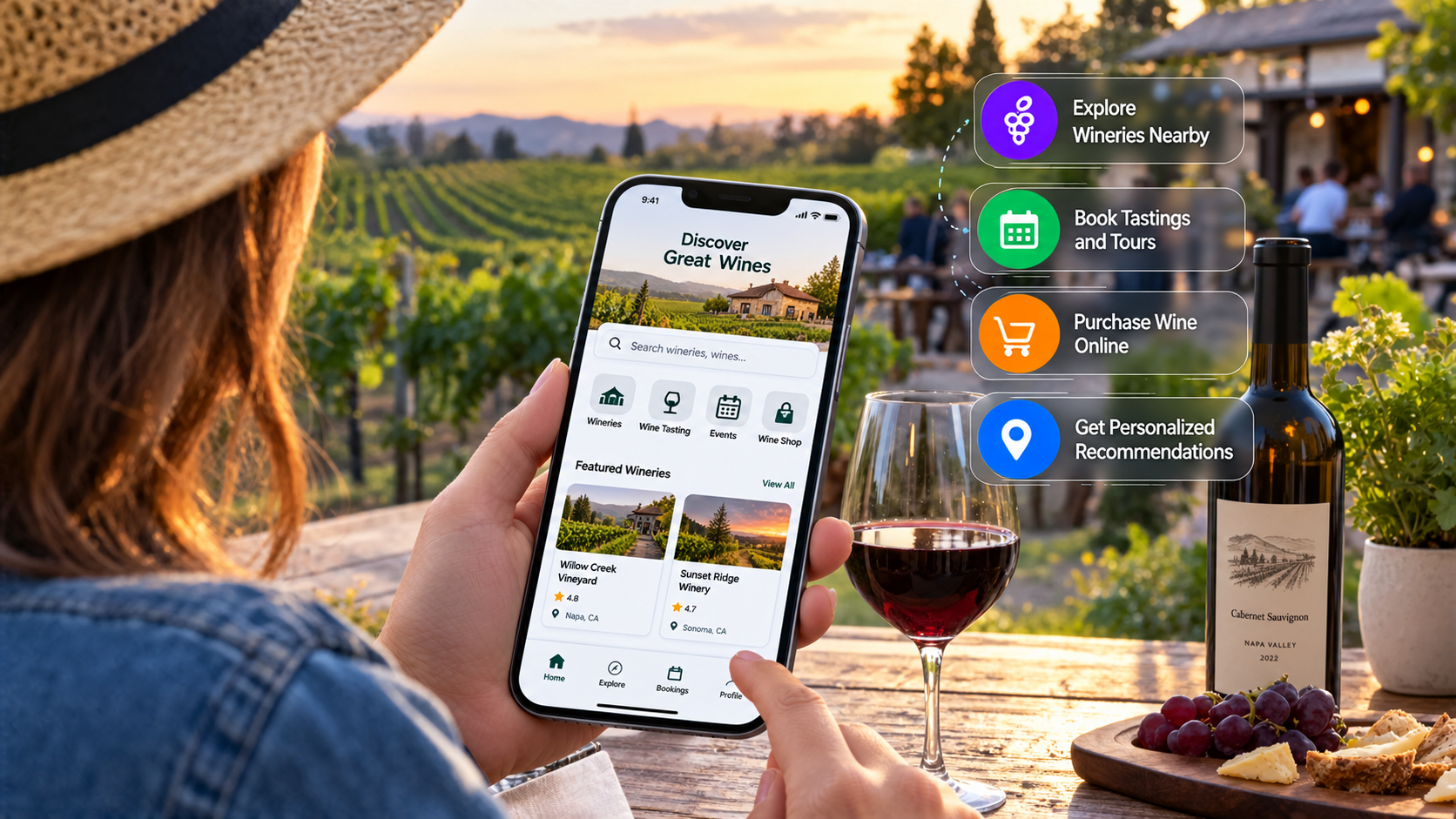
Dana Whitfield runs a twelve-acre family winery in Oregon’s Willamette Valley, and until recently her busiest season looked like organized chaos. Harvest meant clipboards in the vineyard, a paper tasting log by the barrel room, and a wine club list that lived in three different spreadsheets. On a Saturday in October, a visitor asked if she could ship a case to Texas, and Dana spent fifteen minutes figuring out whether she legally could. Then she tried a simple app for tasting reservations, club sign-ups, and shipping checks. The next October, the same Saturday ran itself, and Dana finally got to pour wine instead of chasing paperwork.
That kind of turnaround is why wineries from Napa Valley to the Barossa are now talking to a Mobile App Development company before they plan their next label or tasting room remodel. Wine has always been a business built on place, patience, and story. Mobile apps are giving producers new ways to tell that story, sell directly, and look after the people who love what they make. This guide breaks down how phones are reshaping the winery experience, from the cellar door to the living room.
Why Wine and Smartphones Fit Together
Wine buying is an odd mix of emotion and intimidation. People love the idea of it but often feel unsure about vintages, regions, and pairings. A phone is the perfect tool to quiet that anxiety, because it answers questions in the moment.
Consumers already use apps like Vivino to scan labels and read reviews, CellarTracker to catalog collections, and Wine-Searcher to compare prices. Those habits mean visitors arrive at a winery with expectations. They want to look up your wines before they taste, book a table without calling, and buy a bottle without wrestling with a clunky website.
Wineries that meet those expectations stand out. Those that don’t often lose the sale to a bigger brand that does. The gap isn’t about budget. It’s about whether the experience feels as thoughtful as the wine.
Booking and the Tasting Room Experience
Tasting rooms used to run on walk-ins and a guestbook. Now many require reservations, especially in busy regions like Napa, Sonoma, Tuscany, and Bordeaux. Platforms such as Tock, OpenTable, and Commerce7 handle booking, deposits, and group sizes, and wineries increasingly offer these inside their own branded apps.
A good booking flow does more than fill chairs. It captures guest details, dietary notes, and the occasion, so staff can greet a couple celebrating an anniversary by name. Automated reminders cut no-shows, and waitlist features recover cancelled slots.
Once guests arrive, the phone keeps working. Digital tasting menus show what’s being poured, with tasting notes, food pairings, and a one-tap button to add a bottle to an order. Guests don’t need to flag down staff or remember what they liked. By the time they leave, their favorites are sitting in a cart or a saved list.
Dana noticed something subtle. When guests could save wines they enjoyed during the tasting, they were far more likely to buy later at home. The app turned a pleasant afternoon into a follow-up conversation.
Wine Clubs and Direct-to-Consumer Sales
Direct-to-consumer sales have become the financial backbone for many small wineries. Selling through distributors and retailers leaves thin margins, so a loyal club member who buys several cases a year is worth far more.
Mobile apps make club membership simpler for both sides. Members can skip a shipment, swap a bottle, update a credit card, or add a gift without emailing anyone. Producers can see who’s about to lapse and send a thoughtful offer before it happens. Software like WineDirect, Vinoshipper, and Commerce7 supports this, and a custom app can sit on top to give members a branded home.
Shipping is the tricky part. In the United States, alcohol laws vary by state, and some states block direct shipments entirely. Apps that check destination rules, verify age, and calculate taxes at checkout save wineries from costly mistakes. In the UK, age verification and licensing requirements apply, and delivery partners often need adult signature on arrival.
Augmented Reality, QR Codes, and Storytelling
The label on a bottle is prime real estate, and apps are turning it into a doorway. Scanning a QR code or NFC tag can open a short video from the winemaker, a map of the vineyard block, harvest notes, and recommended dishes. 19 Crimes famously used an augmented reality app to make its label characters speak, which proved how much people enjoy a bottle that talks back.
For small producers, the point isn’t gimmicks. It’s provenance and character. People want to know who grew the grapes, how the vintage unfolded, and why this wine tastes like it does. A thirty-second clip of Dana in her vineyard during a frost night does more for loyalty than any slogan.
Sustainability stories fit naturally here. Organic and biodynamic practices, water use, and carbon footprint data can be shared transparently. Younger buyers, in particular, respond to proof rather than vague claims.
Self-Guided Tours and Vineyard Experiences
Many wineries sit in rural areas where mobile signal is unreliable. That detail matters when designing an app, since a self-guided tour that freezes halfway through a vineyard walk is worse than no tour at all.
Offline-capable apps solve it. Visitors download a map, audio guide, and photo stops before they start. GPS markers point out grape varieties, soil types, old vines, and picnic spots. A short clip might explain why south-facing slopes ripen fruit faster, or how the winery handles harvest.
Events benefit too. Harvest festivals, blending workshops, and food pairing dinners can be sold, checked in, and promoted inside the same app. After the event, a quick message with photos and a rebooking link keeps the momentum going.
Behind the Scenes: Vineyard and Cellar Operations
Not every winery app faces customers. Some of the most valuable ones sit with the team in the field and the cellar.
Vineyard managers use tablets and phones to log pruning, spraying, and pest sightings with photos and GPS tags. Soil moisture sensors, weather stations, and drones capture data that apps turn into plain-language alerts, such as a frost warning at 2 a.m. or a spike in humidity that raises mildew risk. This approach, often called precision viticulture, helps growers apply water and treatments only where needed.
In the cellar, winery management systems like Vintrace and Ekos track tanks, barrels, additions, lab results, and compliance records. Mobile access means a cellar hand can update a barrel’s status without walking back to a desk. Accurate records matter for tax and regulatory reporting, as well as for consistency from vintage to vintage.
Personalization Without the Creep Factor
Apps collect a lot about guests: preferences, purchase history, visit dates, and shipping addresses. Used well, that data enables warm, relevant service. A member who loves Pinot Noir hears about a limited release first. A couple who visited last spring gets an invitation to the new vintage preview.
Used poorly, it feels intrusive. A good rule is to ask yourself whether a thoughtful host would say the same thing in person. Keep messages occasional, useful, and easy to opt out of. Under GDPR and UK data protection law, as well as US state privacy laws like California’s CCPA, wineries need clear consent and secure storage of customer information.
Responsible service belongs in the conversation as well. Wine is an alcoholic product, so apps should verify age, avoid marketing aimed at minors, and encourage responsible drinking. Many producers add reminders about designated drivers and local ride options to their event pages.
What It Takes to Build a Winery App
Most wineries don’t need a giant platform. They need a focused tool that solves a few real problems well. Before spending anything, decide which of the following matters most: reservations, club management, online sales, guest engagement, or internal operations.
On budget, Mobile App Development Cost varies by what you ask for. A straightforward app with tasting reservations, a wine catalog, and basic ordering might start around thirty thousand dollars. Adding club management, shipping compliance, loyalty rewards, offline vineyard tours, and integrations with point-of-sale and inventory systems can push the total toward one hundred and fifty thousand or higher. Design quality, platform choices (iPhone, Android, or both), and the team you hire all shift the figure, and yearly maintenance usually adds a meaningful percentage on top.
For small producers, there’s a sensible middle path. Start with off-the-shelf tools from Commerce7 or Square for bookings and payments, learn what guests actually use, and then invest in a custom layer where the experience needs it. Spending lavishly on features nobody asked for is a quick way to turn a good vintage into a bad year.
A few practical tips help launches go smoothly:
- Train your team. The tasting room staff are the app’s best salespeople. If they don’t use it comfortably, guests won’t either.
- Promote in person. Put QR codes on tables, bottles, shipping boxes, and receipts.
- Test with real guests. Weekend visitors will find problems your developers never imagined.
- Plan for harvest season. Avoid launching major updates during your busiest weeks.
- Measure outcomes. Track reservation conversions, club sign-ups, repeat purchases, and cancellation rates.
Challenges Wineries Should Expect
Mobile apps aren’t a cure for every winery problem, and some pitfalls come up again and again.
Rural connectivity. Weak signal in vineyards and cellars means offline modes and patient testing.
Complex regulation. Alcohol shipping, taxes, and licensing differ by country and state. Compliance tools help, but legal advice still matters.
App fatigue. Customers are reluctant to download another app for one visit. Many wineries use mobile web experiences or wallet passes first, then add a native app once loyalty exists.
Tradition versus technology. Some winemakers worry that screens will cheapen the experience. The best answer is restraint: use the phone to remove friction, and leave the wine, the setting, and the conversation untouched.
Data privacy. Customer lists are valuable and sensitive. Strong security and clear policies are non-negotiable.
Frequently Asked Questions
How do mobile apps help wineries increase sales?
They simplify reservations, club sign-ups, and online ordering, keep customers engaged between visits, and give owners data on what guests actually buy. Direct sales through an app also avoid distributor margins.
What features should a winery app include?
Tasting reservations, a digital wine list with notes, club management, secure checkout with age verification, shipping compliance checks, push notifications, and optional extras like AR labels or self-guided tours.
Do small family wineries really need their own app?
Not always. Many start with existing platforms for bookings and e-commerce. A custom app makes sense when you have a loyal customer base and want a branded experience that stands out.
Can wineries legally sell wine through an app?
Yes, but rules vary widely. In the US, state laws govern direct shipping, and in the UK, licensing and age checks apply. Work with a compliance expert and use software that supports regional rules.
How long does it take to build a winery app?
A simple app typically takes two to four months. A fuller platform with integrations can take six months or more, including testing and app store review.
Are apps useful in the vineyard itself?
Yes. Field apps log vineyard activities, track weather and soil data, and send alerts, helping growers make timely decisions.
Final Thoughts
A great winery has always been more than a place that sells wine. It’s a place where land, season, and a few stubborn people become something you can taste. Mobile apps don’t change that. What they change is how easily visitors can step inside the story, and how well the winery can look after them once they’ve left.
On the last Saturday of harvest, Dana looked up from the pouring table and noticed her phone was quiet for the first time all day. Reservations were handled, the club orders had processed overnight, and the guests in front of her were arguing happily about which Pinot they liked best. That’s the version of technology she wanted from the start: invisible, helpful, and out of the way of the wine.