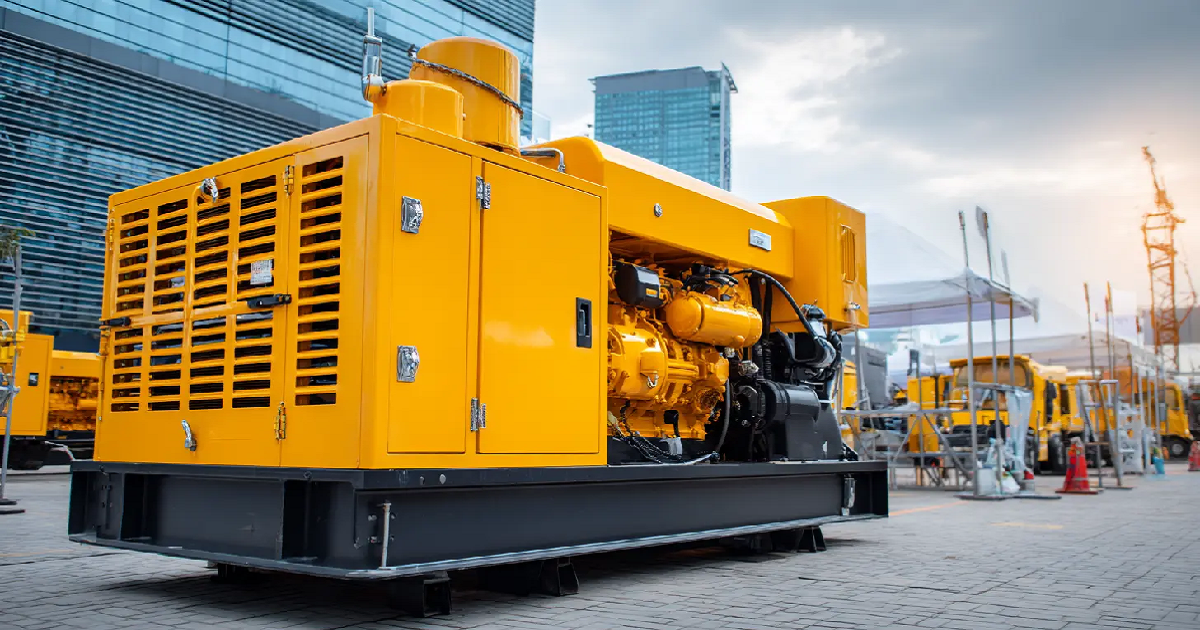
Ask any factory owner in Faisalabad, a hospital administrator in Lahore, or a shop owner in Karachi about their biggest operational headache, and unreliable grid power will come up fast. Voltage swings, scheduled outages, and unexpected faults cost businesses money every single day. That is why diesel generators in Pakistan have moved from “backup option” to “core business equipment.”
But owning a Diesel Generators in Pakistan and getting the best performance from it are two different things. A poorly maintained unit burns extra fuel, trips under load, and fails exactly when you need it. In this guide, Alpine Industrial Con shares practical, field-tested advice to help you get dependable power, lower running costs, and a longer machine life through 2027 and beyond.
Why Diesel Gensets Still Make Sense for Pakistani Businesses
Solar is growing quickly, but it cannot yet carry heavy industrial loads alone. Batteries are expensive, and cloudy days or night shifts still need a dependable source. Diesel power units fill that gap for a few reasons:
- High torque and load tolerance: They handle motors, compressors, and pumps that start with heavy inrush currents.
- Fuel availability: Diesel is sold in almost every city and highway station, unlike gas supplies that can be curtailed.
- Proven durability: A well-kept engine can run for tens of thousands of hours.
- Fast response: Modern auto-start panels bring a unit online within seconds of a mains failure.
For textile mills, cold storage, hospitals, telecom towers, and construction sites, these strengths are hard to beat.
Choosing the Right Size: The Foundation of Good Performance
The most common mistake we see is wrong sizing. An oversized machine wastes fuel and suffers “wet stacking,” where unburnt fuel builds up in the exhaust. An undersized one overheats and wears out early.
Calculate Your Real Load
List every device you plan to run, note its running and starting wattage, and add a safety margin of 20 to 25 percent. Motors can draw three to six times their rated current during startup, so sequence large loads rather than starting everything together.
Aim for the Sweet Spot
Diesel engines run most efficiently at roughly 60 to 80 percent of rated capacity. For example, if your factory floor needs 160 kVA at peak, a 200 kVA set is a sensible choice. A 500 kVA machine would idle inefficiently most of the day.
Consider Prime vs Standby Ratings
A standby rating suits occasional outages. If your area faces long daily load shedding, choose a prime-rated engine built for extended running hours. It is a smaller price difference than rebuilding an overworked standby unit.
Maintenance Habits That Protect Your Investment
Follow a Fixed Service Schedule
Change engine oil and the oil filter at the intervals the manufacturer recommends. In Pakistan’s hot, dusty conditions, many technicians shorten that interval, especially for machines running long hours in summer. Replace fuel filters and air filters on time, as clogged filters are behind a large share of avoidable breakdowns.
Keep the Cooling System Healthy
Temperatures in Sindh and southern Punjab regularly cross 45°C. Check coolant level and quality weekly, clean radiator fins, and inspect belts and hoses. Overheating is one of the fastest ways to damage a cylinder head.
Test Regularly, Even Without Outages
A set that sits idle for months develops battery problems, fuel degradation, and sticky components. Run it on load for 20 to 30 minutes every week or two. This keeps lubrication fresh and confirms your auto-start system still works.
Fuel Quality: The Hidden Cost Driver
Diesel prices change often, so fuel efficiency matters more than ever. But quality matters just as much as price.
Avoid Contaminated Diesel
Water and sediment in fuel damage injectors and pumps. Buy from reputable stations, store fuel in clean, sealed tanks, and fit a water separator. Drain tank sumps regularly, particularly during monsoon season when humidity increases condensation.
Store Fuel Smartly
Do not keep large quantities for many months. Old diesel can grow microbial sludge that blocks filters. Rotate your stock and keep tanks as full as practical to limit condensation.
Track Consumption
Record litres used against hours run. A sudden rise usually signals a problem such as dirty injectors, a blocked air filter, or an overloaded machine. Catching it early saves real money.
Installation Matters More Than You Think
Even a premium machine underperforms if it is installed badly.
- Ventilation: Provide enough airflow for combustion and cooling. A cramped room traps heat and cuts output.
- Exhaust routing: Direct exhaust outside and away from windows and intake vents, with proper insulation.
- Foundation: Use a level concrete base with anti-vibration mounts.
- Noise control: Acoustic canopies or sound-attenuated rooms are important in residential areas and near hospitals.
- Earthing and protection: Proper grounding, circuit breakers, and surge protection prevent electrical hazards and equipment loss.
In Karachi and other coastal cities, salt-laden air accelerates corrosion, so choose weather-resistant canopies and protective coatings.
Smart Upgrades for 2027
Automatic Transfer Switches (ATS)
An ATS shifts your load to the generator and back automatically, removing delays and human error. For hospitals, data centres, and cold chains, it is practically essential.
Remote Monitoring
Modern controllers let you track fuel level, temperature, running hours, and fault codes from a phone. Remote alerts mean you act before a small issue becomes an expensive failure.
Hybrid Solar-Diesel Systems
Many Pakistani businesses now pair solar panels with a genset. Solar handles daytime loads while the diesel unit covers nights and cloudy periods. This can reduce fuel use significantly and cut running hours, extending engine life.
Power Factor Correction
Improving power factor reduces wasted energy and lowers the strain on your alternator. It is a modest upgrade that often pays back quickly for factories with many motors.
Common Mistakes to Avoid
- Ignoring the manual: Service intervals exist for a reason.
- Running at very low load: Prolonged light loading leads to carbon buildup.
- Skipping genuine parts: Cheap filters and fake spares often cost more in repairs.
- Neglecting the battery: A weak starter battery is the top reason a set fails to start.
- Hiring unqualified technicians: Use trained engineers who understand your brand and model.
Buying Tips for the Pakistani Market
When shopping for a new or used unit, look beyond the headline price.
- Engine and alternator brand: Proven names such as Perkins, Cummins, Volvo Penta, and Kohler are widely supported across Pakistan.
- Spare parts availability: Choose a model whose parts are easy to find locally.
- After-sales service: Fast response from a local service team can save days of downtime.
- Warranty terms: Read what is covered and for how many hours or years.
- Fuel efficiency data: Ask for consumption figures at 50, 75, and 100 percent load.
For used machines, always check running hours, inspect for oil leaks, and test under load before paying.
Power cuts are not going away overnight, which makes a dependable backup system a smart business decision. With the right sizing, disciplined maintenance, clean fuel, and a few modern upgrades, diesel generators in Pakistan can deliver reliable, cost-effective power for years. Treat your generator as a long-term asset rather than an afterthought, and it will protect your operations when the grid lets you down.
If you need expert advice on selection, installation, or servicing, the team at Alpine Industrial Con is ready to help you build a power solution that fits your site and budget.
FAQs
1. How long can a diesel generator run continuously?
A prime-rated unit can run for many hours daily, provided it is serviced on time and has enough fuel and coolant. Standby-rated sets are designed for shorter outages, so check your model’s rating before running it for long periods.
2. How often should I service my generator?
Most manufacturers recommend servicing every 250 running hours or six months, whichever comes first. In hot, dusty areas, shorter intervals are wise.
3. How can I reduce diesel consumption?
Match the generator size to your load, avoid running it lightly loaded, keep filters and injectors clean, and consider a hybrid solar setup. Tracking fuel use also helps you spot problems early.
4. Is it better to buy a new or used generator?
A new unit offers a warranty and the latest efficiency features. A used one can save money upfront, but you should verify running hours, service history, and test performance under load first.
5. Why does my generator produce black smoke?
Black smoke often points to a clogged air filter, faulty injectors, poor fuel quality, or overloading. A technician should inspect the unit promptly to avoid engine damage.