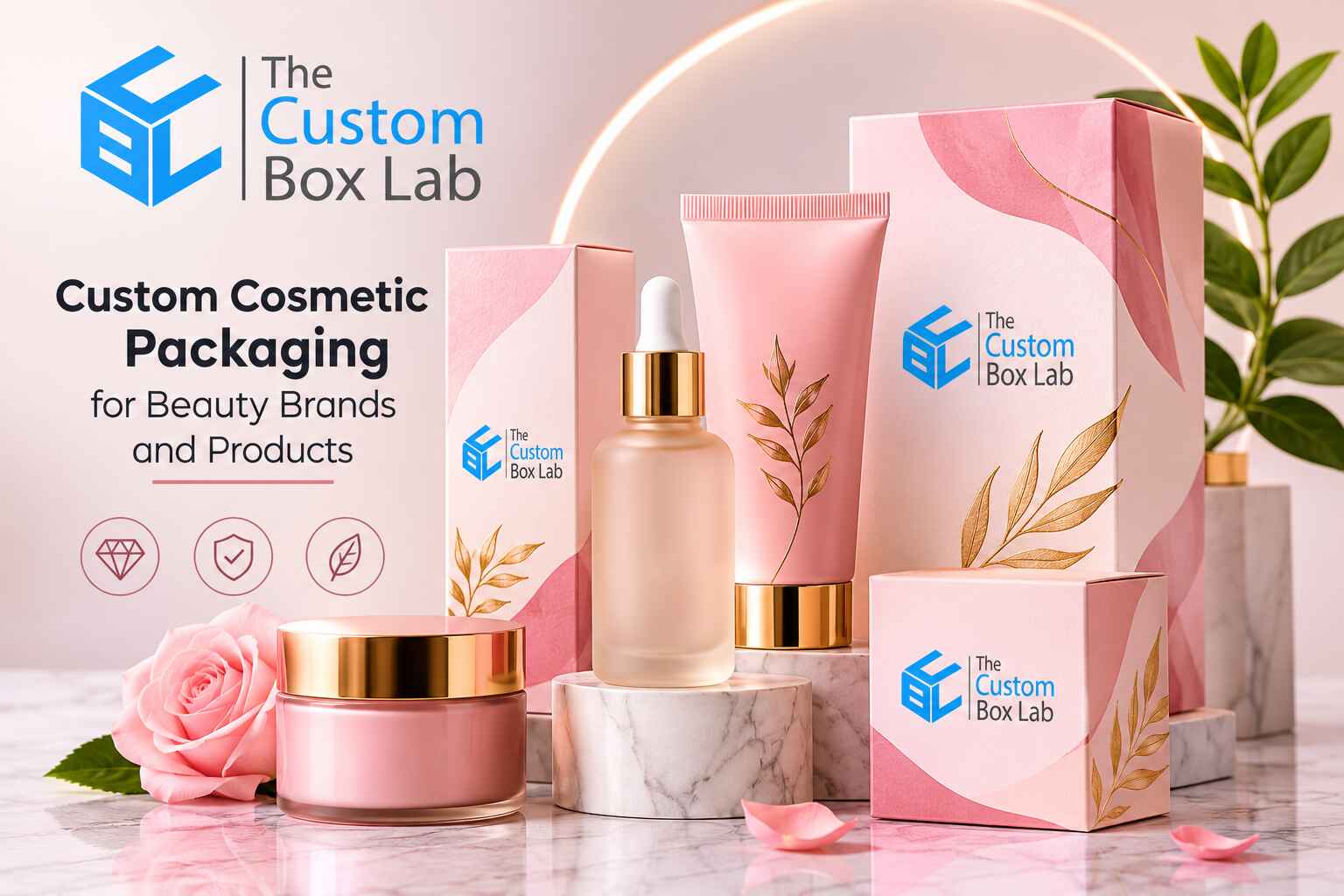
Custom cosmetic packaging is boxing or containers designed around a specific beauty product’s shape, branding, and shelf positioning, rather than a generic, one-size-fits-all carton. For skincare, makeup, and personal care brands, the right packaging protects the product while doing real work for brand recognition at the point of sale. This guide covers the box styles, materials, and design choices that actually matter when packaging a beauty product, from thecustomboxlab.com/cosmetic-boxes options to practical cost and compliance considerations.
What Is Custom Cosmetic Packaging?
Custom cosmetic packaging refers to boxes, cartons, or outer containers built to a brand’s exact specifications, covering size, material, print, and finish, rather than selected from a standard catalog size. For a beauty brand, this usually means the box is shaped around the product’s actual container, whether that’s a jar, bottle, tube, or compact.
A few of the most common cosmetic packaging applications:
- Folding cartons for retail-shelf skincare and makeup products
- Rigid boxes for premium gift sets and higher-priced product lines
- Window boxes that let the product’s color or texture show through before purchase
- Custom inserts that hold multiple items securely within a single outer box
Why Does Packaging Matter More for Cosmetics Than Some Other Products?
Cosmetics are often purchased based on visual appeal and perceived quality before a customer ever tests the product, which makes packaging a bigger factor in the buying decision than it is for many other categories. A well-designed box also protects fragile components like glass bottles or pressed powder compacts during shipping, which matters directly to return rates.
What Box Styles Are Used for Cosmetic Products?
The right box style depends on the product’s shape, fragility, and price point, since a lipstick tube and a glass serum bottle have very different packaging needs. Most cosmetic brands choose between folding cartons, rigid boxes, and specialty styles depending on where the product sits in their lineup.
| Box style | Best for | Typical construction |
|---|---|---|
| Folding cartons (tuck-end) | Lipstick, single skincare items, mid-range makeup | Lightweight paperboard, cost-efficient at volume |
| Rigid boxes | Gift sets, premium skincare, fragrance | Heavier chipboard, sturdier feel |
| Window boxes | Compacts, products where color matters | Die-cut clear window panel |
| Custom tray-and-sleeve boxes | Multi-item sets, subscription boxes | Separate tray fitted inside an outer sleeve |
Which Box Style Suits a New, Smaller Beauty Brand?
Folding cartons are usually the practical starting point for a newer brand, since they’re cost-efficient at smaller order volumes while still allowing full custom printing and branding. Rigid boxes become worth the added cost once a brand is positioning specific products as premium or gift-ready, where the sturdier material reinforces that pricing.
What Materials Should You Choose for Cosmetic Packaging?
Material choice affects both how the box feels and how well it holds up during shipping and shelf handling. Paperboard, rigid chipboard, and kraft board each suit a different combination of price point and brand positioning.
- Paperboard (SBS board): smooth printing surface, lightweight, standard choice for most retail cosmetic cartons
- Rigid chipboard: thicker, sturdier construction used for premium boxes and gift packaging
- Kraft board: natural brown or white kraft finish, often chosen by clean beauty and sustainability-focused brands
Does Material Choice Affect Product Protection?
Yes, heavier board and double-wall construction reduce the risk of crushed corners or dented boxes during transit, which matters more for glass containers or pressed products than for sturdier plastic tubes. If your cosmetic line ships a glass bottle or compact mirror, it’s worth discussing structural reinforcement or a custom insert with your packaging supplier rather than relying on the outer box alone.
What Finishes and Printing Options Work Well for Beauty Packaging?
Finishes like matte lamination, spot UV, and foil stamping are what typically separate a cosmetic box that looks premium from one that looks purely functional. The right choice depends on your brand’s visual identity more than any fixed rule.
- Matte or soft-touch lamination gives a smooth, tactile finish that reads as higher-end on skincare and fragrance boxes.
- Foil stamping on a logo or brand name adds a metallic accent, commonly used for premium or gift-focused lines.
- Spot UV coating highlights specific design elements against a matte background without the cost of full embossing.
- Digital printing suits smaller production runs and new product launches, while offset printing becomes more cost-efficient at higher volumes.
How Much Does Custom Cosmetic Packaging Cost?
Custom cosmetic packaging typically costs $0.50 to $3.00 per unit depending on box style, material, and finishing choices, with rigid boxes and multiple finishes sitting toward the higher end. Order volume has the biggest overall effect on price, since setup and design costs get spread across more units at scale.
| Order volume | Typical cost per unit | Notes |
|---|---|---|
| 100–500 units | $1.50–$3.00 | Common for a product launch or small test batch |
| 1,000–3,000 units | $0.80–$1.50 | Standard range once a product line is established |
| 5,000+ units | $0.50–$1.00 | Reached with consistent, proven demand |
What Should You Look for in a Cosmetic Packaging Supplier?
A dependable supplier should offer a design proof or mockup before production, clear turnaround timelines, and pricing that doesn’t hide setup or plate charges until checkout. This matters especially for cosmetics, where color accuracy and finish quality directly affect how premium the final product feels.
- Confirm whether a 3D mockup or physical sample is included before you commit to a full print run
- Ask whether there’s a minimum order requirement, particularly useful if you’re testing a new box design
- Check what board weight and finish options are included at your quoted price point
- Clarify turnaround time in writing, since cosmetic launches are often tied to a specific release date
The Custom Box Lab offers custom cosmetic packaging in paperboard, rigid, and kraft materials with no minimum order requirement, which gives a smaller or newer beauty brand room to test a box design before scaling into a larger production run.
Are There Labeling Rules for Cosmetic Packaging in the USA?
Yes, the FDA requires cosmetic packaging sold in the USA to display specific information, including an ingredient list and net quantity statement, regardless of how the box is designed. If your packaging includes any environmental claims, such as “recyclable,” FTC Green Guides require those claims to accurately reflect the materials actually used, so it’s worth confirming this with your supplier before finalizing your artwork.
How Long Does a Custom Cosmetic Packaging Order Take to Produce?
Standard production for custom cosmetic packaging generally takes 15 to 20 business days, with faster express options available in around 7 to 10 days at some suppliers for an added cost. More complex finishes, such as foil stamping or custom-fitted inserts, can extend this timeline slightly, so it’s worth confirming the exact schedule for your specific design before planning a launch date around it.
Conclusion
Custom cosmetic packaging works best when the box style, material, and finish are chosen to match the actual product and its price point, rather than defaulting to whatever looks impressive in a catalog. A folding carton with one strong finish can do just as much for a mid-range product as a rigid box does for a premium one, as long as the choice fits the brand. Reviewing a mockup before full production and confirming turnaround time in writing are the two steps that consistently save beauty brands from costly reprints and missed launch dates.
Frequently Asked Questions
How much does custom cosmetic packaging cost? Custom cosmetic packaging typically costs $0.50 to $3.00 per unit depending on box style, material, and finishing options. Orders of 5,000 units or more usually bring the price toward the lower end of that range.
How do I order custom cosmetic packaging for my brand? Share your product dimensions, preferred box style, and branding details with a supplier, review a digital or physical mockup, then confirm your order quantity. Most suppliers respond with pricing and turnaround details within a day or two.
What is the minimum order quantity for custom cosmetic boxes? Minimum order quantities vary by supplier, with some, including The Custom Box Lab, not requiring a strict minimum. Smaller test orders generally cost more per unit than a larger production run.
How long does it take to produce custom cosmetic packaging? Standard production commonly takes 15 to 20 business days, with express options available in around 7 to 10 days at some suppliers. Complex finishes like foil stamping or custom inserts can add a few extra days.
What packaging materials work best for cosmetics? Paperboard is the standard choice for most retail cosmetic cartons, while rigid chipboard suits premium or gift packaging that needs a sturdier feel. Kraft board is a common option for clean beauty and sustainability-focused brands.
Does cosmetic packaging need to meet FDA labeling requirements? Yes, cosmetic packaging sold in the USA must display required information such as an ingredient list and net quantity statement under FDA rules, regardless of the box’s design. This applies whether the packaging is a simple folding carton or a premium rigid box.
What’s the difference between a folding carton and a rigid box for cosmetics? A folding carton is lighter, ships flat, and is more cost-efficient at smaller volumes, making it a common choice for everyday retail products. A rigid box is heavier and sturdier, typically chosen for gift sets or premium product lines where the box itself reinforces the price point.