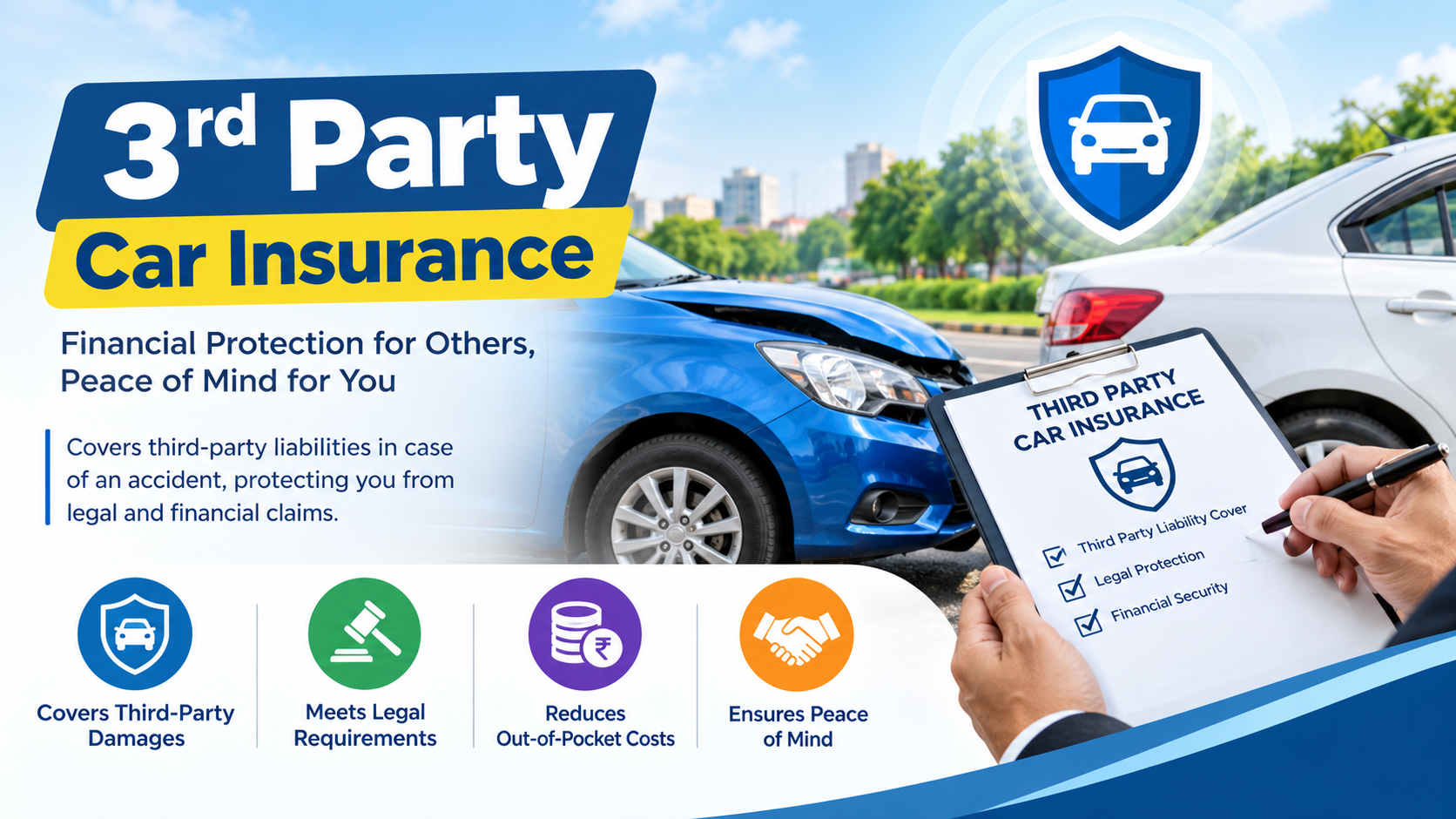
A car loses value every year, but the risks around it do not disappear with age. Accidents, theft, floods and legal claims can occur in the first year or the tenth. This article explains how comprehensive insurance for vehicle owners works as long-term protection, what each part of the policy covers and how to keep it relevant as the car ages. It also explains the role of 3rd party car insurance, which provides the mandatory liability cover.
What are the two layers of a package policy?
A package policy combines third-party liability cover with own-damage cover. The liability section pays for eligible injury, death or property damage caused to others, while the own-damage section covers specified losses to your own car. Together, they address both legal liabilities and vehicle repair or replacement costs.
| Cover type | What it protects against | Mandatory? |
| Third-party liability | Eligible claims involving other people and their property | Yes, for vehicles used in public places |
| Own-damage cover | Specified damage to or loss of your own car | No |
| Owner-driver personal accident cover | Accidental injury or death of the owner-driver, subject to terms | Required where applicable, unless an accepted exemption applies |
What do third-party and own-damage covers protect against?
Indian motor vehicle law requires applicable third-party liability insurance for vehicles used in public places. It covers eligible third-party injury and death claims, while property damage is subject to the applicable legal limit and policy terms. Owner-driver personal accident cover may also be required, subject to eligibility and applicable exemptions.
Without the required liability cover, vehicle owners may face legal penalties and personal financial liability for eligible claims.
Own-damage cover provides protection that third-party insurance does not offer. It usually covers specified losses arising from:
- Accidents and collisions
- Fire, explosion and self-ignition
- Theft
- Floods, storms, earthquakes and landslides
- Riots, strikes and malicious acts
- Damage during transit by road, rail or air, where included in the policy
Wear and tear, mechanical breakdown and damage arising from driving without a valid licence may be excluded, depending on the policy wording. Review the exclusions before purchasing or renewing cover.
How do no-claim bonuses, add-ons and continuous cover support long-term protection?
Long-term protection depends on how you manage your policy over the years. Three features can help maintain its value.
No-claim bonus (NCB): You may earn a discount on the own-damage premium for claim-free years. Under the standard NCB scale, the discount can rise from 20% after the first claim-free year to 50% after five consecutive claim-free years. NCB can generally be transferred when you change your car or insurer, subject to the applicable rules and documentation.
Add-ons: Options such as zero depreciation, engine protection, roadside assistance and return to invoice cover address specific risks. Their suitability depends on the vehicle’s age, usage, value and policy conditions. Review them at each renewal.
Continuous cover: Renewing on time helps avoid a break in protection and can preserve NCB eligibility. A policy history also helps you track coverage and claim records.
How does vehicle depreciation affect own-damage cover over time?
Own-damage premiums are influenced by the vehicle’s Insured Declared Value (IDV), which generally decreases as the car ages. The following standard depreciation schedule is used to calculate IDV for vehicles up to five years old under applicable motor insurance rules.
| Age of the car | Depreciation applied |
| Up to 6 months | 5% |
| Over 6 months to 1 year | 15% |
| Over 1 year to 2 years | 20% |
| Over 2 years to 3 years | 30% |
| Over 3 years to 4 years | 40% |
| Over 4 years to 5 years | 50% |
A lower IDV can mean a lower payout in the event of theft or total loss. Review the declared value at renewal to ensure it reasonably reflects the vehicle’s insured value. Do not discontinue own-damage cover solely because the car is older; repairs can still be expensive.
Should you choose a multi-year policy or annual own-damage cover?
New cars are subject to specific long-term third-party insurance requirements at purchase. Own-damage cover may be purchased separately for a shorter term, while some insurers offer bundled options for longer periods.
Before choosing a multi-year plan, check what it includes, how NCB is handled, and what happens if you sell the car before the policy expires. A longer-term option can reduce renewal frequency, while annual own-damage cover allows you to review the insured value, premium and add-ons more frequently.
How do insurance records affect resale and claims?
A clear insurance and repair history can help buyers understand how a vehicle has been maintained. Keep policy documents, claim records and repair invoices organised, including records related to 3rd party car insurance.
When selling the car, complete the insurance transfer through the insurer and follow the required process and timelines. NCB belongs to the policyholder rather than the vehicle, so it generally cannot be transferred to the buyer. Ask your insurer about the documents required to retain or transfer the bonus to another eligible vehicle.
How can you maintain long-term vehicle protection and avoid common mistakes?
Follow these practices to keep your cover aligned with your vehicle’s needs:
Step 1: Renew the policy before its expiry date to avoid a break in cover.
Step 2: Review the IDV at each renewal and ensure it reflects an appropriate insured value.
Step 3: Reassess add-ons annually and retain those relevant to your vehicle and driving conditions.
Step 4: Keep your contact details updated so you receive renewal notices.
Step 5: Declare accessories and modifications as required by the insurer.
Step 6: Choose a voluntary deductible only if you can afford the additional amount payable when making a claim.
Step 7: Store the policy document securely and verify the available vehicle insurance details through official services where supported.
Avoid letting your policy lapse, choosing an unnecessarily low IDV to reduce the premium, dropping own-damage cover without assessing repair costs, overlooking exclusions or delaying the insurance transfer after selling the vehicle. NCB consequences depend on the applicable rules and timing, so confirm the requirements with your insurer.
Conclusion
Long-term vehicle protection depends on maintaining suitable cover and reviewing it as your car ages. Comprehensive insurance for vehicle owners combines third-party liability protection with own-damage cover, while the right IDV and relevant add-ons help address changing risks. Review policy terms at every renewal and keep your records updated so your insurance continues to meet your needs.