Skin problems are common and can affect people of all ages. Redness, itching, swelling, rashes, and dry patches are often associated with allergic reactions. However, allergies are not always the cause of these symptoms. Several Common Skin Conditions can produce similar signs, making it difficult to identify the underlying problem without proper evaluation. Conditions such as eczema, psoriasis, fungal infections, rosacea, and granuloma annulare may initially appear to be allergic reactions but require different approaches to care.
Understanding the differences between these conditions is important for choosing appropriate treatments and preventing symptoms from becoming worse. While some skin problems improve with gentle skincare and moisturizers, others may require prescription medication or specialized treatment. Using allergy creams or other remedies without knowing the cause can sometimes delay recovery.
In this article, we explore several skin conditions that are frequently mistaken for allergies, explain their distinguishing features, and discuss practical ways to maintain healthy skin.
1. Eczema: A Condition Often Confused With Allergies
Eczema, particularly atopic dermatitis, is one of the most frequently misunderstood skin conditions. It causes inflammation, dryness, redness, and intense itching. Because these symptoms can resemble an allergic reaction, many people assume that eczema is simply an allergy affecting the skin.
However, eczema is a complex inflammatory condition involving the skin barrier, immune system, and genetic factors. Although allergens may trigger flare-ups in some individuals, eczema does not always result from an allergy.
Common symptoms include rough or scaly patches, persistent itching, cracked skin, and inflammation. In lighter skin tones, affected areas may appear red, while darker skin tones may show brown, purple, gray, or darker patches. Eczema frequently affects the hands, face, neck, and areas around the elbows and knees.
Managing eczema generally involves moisturizing regularly, using mild fragrance-free cleansers, and avoiding personal triggers. A healthcare professional may recommend topical corticosteroids or other medications when inflammation is significant.
Unlike a temporary allergic rash, eczema often follows a recurring pattern, with periods of improvement followed by flare-ups. Recognizing this pattern can help individuals seek suitable treatment instead of relying exclusively on allergy medication.
2. Contact Dermatitis: Irritation or an Allergic Reaction?
Contact dermatitis is another condition that can easily be confused with other skin problems. It develops when the skin reacts to something it touches. There are two main types: irritant contact dermatitis and allergic contact dermatitis.
Irritant contact dermatitis occurs when a substance directly damages or irritates the skin. Frequent handwashing, cleaning products, detergents, and certain chemicals can contribute to this problem. Allergic contact dermatitis, by comparison, involves an immune response to a particular substance, such as nickel, fragrance, or certain preservatives.
Both types may cause itching, redness, burning, swelling, dryness, and blisters. The affected area often corresponds to where the skin encountered the triggering substance, although the rash may sometimes spread.
The distinction matters because antihistamines alone may not address the underlying inflammation or skin damage. Identifying and avoiding the trigger is often an important part of treatment.
People experiencing recurring rashes may benefit from a medical assessment and, when appropriate, patch testing to identify contact allergens. Using gentle, fragrance-free skincare products can also help reduce irritation.
3. Psoriasis: More Than an Allergic Rash
Psoriasis is a chronic inflammatory skin condition that speeds up the production of skin cells. The rapid buildup of these cells creates thick, raised patches that may appear red, pink, purple, or darker than the surrounding skin. These patches often have a silvery or whitish scale.
Because psoriasis can cause itching and irritation, people sometimes mistake it for eczema or an allergic reaction. However, psoriasis typically produces more clearly defined plaques and commonly affects the scalp, elbows, knees, and lower back. Some individuals also experience changes in their fingernails or toenails.
Unlike a typical short-lived allergic rash, psoriasis often persists for long periods and may improve and worsen in cycles. In some cases, it is associated with psoriatic arthritis, which can cause joint pain, swelling, and stiffness.
Treatment depends on the severity and location of the condition. Options may include moisturizers, prescription topical treatments, phototherapy, and systemic medications.
People who suspect psoriasis should consult a dermatologist rather than repeatedly treating the patches as allergies. Early identification can help control symptoms and reduce the risk of complications.
4. Fungal Skin Infections: When a Rash Is Not an Allergy
Fungal infections are another common reason for persistent skin irritation. Ringworm, athlete’s foot, and certain yeast infections can cause itching, redness, scaling, and discomfort that resemble allergic skin reactions.
Ringworm, despite its name, is caused by fungi rather than worms. It often produces a circular or ring-shaped rash with a more noticeable outer edge and sometimes clearer skin in the center. Athlete’s foot commonly affects the spaces between the toes, causing peeling, cracking, itching, or burning.
These infections may spread through direct skin contact, contaminated surfaces, shared towels, or infected animals, depending on the type of fungus.
One important difference is that fungal infections generally require antifungal treatment rather than allergy medication. Applying topical corticosteroids without an appropriate diagnosis can sometimes mask the infection and allow it to worsen.
Keeping the skin clean and dry, avoiding shared personal items, and wearing breathable footwear can reduce the risk of certain fungal infections. If a rash spreads, persists, or repeatedly returns, a healthcare professional may examine a skin sample to confirm the diagnosis.
5. Rosacea: Redness That Resembles an Allergic Reaction
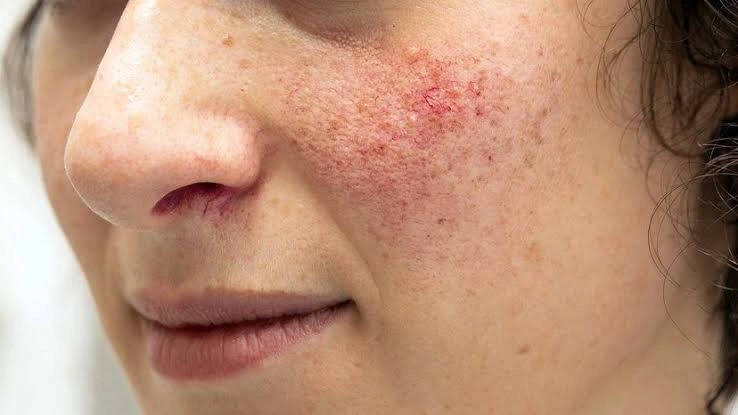
Rosacea is a chronic skin condition that mainly affects the face. It can cause persistent redness, visible blood vessels, burning sensations, sensitivity, and acne-like bumps. Some people also experience eye irritation.
Because facial redness and swelling may occur during allergic reactions, rosacea is sometimes misidentified as an allergy. However, rosacea commonly affects the cheeks, nose, forehead, and chin, and its symptoms may worsen with heat, sunlight, spicy foods, alcohol, stress, or temperature changes.
Unlike many allergic reactions, rosacea does not necessarily cause intense itching or develop immediately after exposure to a particular substance.
Treatment may include gentle skincare, sun protection, prescription topical medications, or oral medication when appropriate. Identifying individual triggers can also help reduce flare-ups.
People with rosacea should avoid harsh exfoliants and strongly fragranced products if these aggravate their skin. Persistent facial redness, painful bumps, or eye symptoms deserve professional evaluation because treatment can help prevent worsening symptoms.
6. Granuloma Annulare: A Ring-Shaped Rash That Can Be Misunderstood
Granuloma annulare is a relatively uncommon inflammatory skin condition that frequently causes smooth, ring-shaped bumps. These bumps may form circular or semicircular patterns on the hands, feet, fingers, or other areas of the body.
Because the affected skin can appear red, pink, purple, or skin-colored, granuloma annulare may be mistaken for an allergy, ringworm, or another inflammatory rash. However, the bumps are usually smooth rather than scaly, and the condition often causes little or no itching.
The exact cause of granuloma annulare remains uncertain. In many cases, it resolves without treatment, although some forms can persist or recur. A dermatologist may diagnose it by examining the skin and, when necessary, performing a skin biopsy.
Treatment depends on the type, extent, and symptoms of the condition. Options may include observation, prescription corticosteroids, injections, or other medical therapies.
Some individuals explore Herbal Supplements for Granuloma Annulare as part of their interest in natural wellness. However, there is currently insufficient high-quality scientific evidence to establish that herbal supplements can cure granuloma annulare or reliably prevent its recurrence. Supplements may also interact with medications or cause unwanted effects.
Anyone considering supplements should discuss them with a qualified healthcare professional, particularly if they take other medicines or have an existing medical condition. Natural products should complement informed healthcare decisions rather than replace a proper diagnosis or proven treatment.
7. Hives: Allergies Are Not the Only Possible Trigger
Hives, also called urticaria, are raised, itchy welts that can appear suddenly and change shape or location. They are commonly associated with allergies, including reactions to certain foods or medications. However, not every episode of hives is caused by an allergic response.
Infections, physical pressure, heat, cold, exercise, and other triggers can also cause hives. In some cases, the underlying cause remains unknown.
Individual welts usually fade within 24 hours, although new ones may appear elsewhere. This shifting pattern distinguishes hives from many persistent skin conditions, such as psoriasis or eczema.
Treatment may include nonsedating antihistamines, depending on the cause and individual circumstances. Recurrent or prolonged symptoms should be assessed by a healthcare professional to determine whether further investigation is needed.
Important: Hives accompanied by difficulty breathing, throat tightness, faintness, or swelling of the tongue or throat may indicate a life-threatening allergic reaction. Seek emergency medical care immediately.
8. Seborrheic Dermatitis: Flaking That Can Be Mistaken for Allergies
Seborrheic dermatitis is an inflammatory condition that commonly affects areas rich in oil-producing glands. These include the scalp, eyebrows, sides of the nose, ears, and upper chest.
Symptoms may include redness, itching, and greasy or dry flakes. On the scalp, it is often associated with dandruff. Since the condition can cause irritation and visible inflammation, it may be mistaken for an allergic reaction to shampoo, hair dye, or skincare products.
Although personal care products can irritate the skin or cause separate allergic reactions, seborrheic dermatitis is associated with a combination of factors, including the skin’s response to Malassezia yeast and individual susceptibility.
Treatment often involves medicated shampoos or topical products containing antifungal ingredients. Depending on the severity, a clinician may also recommend short-term anti-inflammatory treatment.
Avoiding harsh products and following a consistent skincare routine may help manage symptoms. Persistent facial or scalp inflammation should be assessed if ordinary dandruff products do not provide relief.
9. How to Care for Skin Without Making Symptoms Worse
When a skin rash appears, it is tempting to try several creams, oils, or home remedies at once. However, using multiple products without understanding the cause may increase irritation and make it more difficult to identify the underlying condition.
A few simple habits can support skin health:
- Use gentle cleansers:Choose fragrance-free products designed for sensitive skin.
- Moisturize regularly:A suitable moisturizer helps support the skin barrier and reduce dryness.
- Avoid scratching:Scratching can damage the skin and increase the risk of infection.
- Track possible triggers:Record new products, environmental exposures, and changes in symptoms.
- Protect your skin:Use appropriate sun protection and avoid known irritants.
- Seek professional advice:Persistent, spreading, painful, or unexplained rashes may require medical assessment.
Some people also explore Herbal Care Products because they prefer plant-derived ingredients in their personal care routines. Certain products containing ingredients such as colloidal oatmeal may help soothe dry or irritated skin, depending on the formulation and the individual’s needs.
Nevertheless, herbal does not automatically mean safe or effective. Essential oils, botanical extracts, and fragranced products can trigger irritation or allergic contact dermatitis in some individuals. It is wise to review ingredients carefully and discontinue a product if it causes burning, swelling, or worsening redness.
For unexplained rashes, professional guidance is particularly important before applying concentrated herbal preparations or taking supplements marketed for skin conditions.
10. When Should You See a Dermatologist?
Although some mild skin problems improve with basic skincare, persistent symptoms should not be ignored. Consider arranging a medical assessment if a rash lasts for several weeks, repeatedly returns, spreads rapidly, becomes painful, or fails to improve with appropriate care.
Medical attention is also important when the skin develops pus, increasing warmth, significant swelling, fever, or open sores, as these symptoms may indicate infection or another condition requiring treatment.
A dermatologist can evaluate the rash’s appearance, distribution, duration, and associated symptoms. Depending on the suspected cause, diagnosis may involve a physical examination, allergy patch testing, skin scrapings, or a biopsy.
Getting the diagnosis right can prevent unnecessary treatments and help you find an approach suited to your specific skin condition.
Conclusion
Many Common Skin Conditions produce symptoms that resemble allergic reactions, but their causes and treatments can differ significantly. Eczema, contact dermatitis, psoriasis, fungal infections, rosacea, granuloma annulare, hives, and seborrheic dermatitis each have distinguishing characteristics that can help guide diagnosis.
Maintaining a gentle skincare routine, avoiding known irritants, and monitoring changes in your skin are useful first steps. Although Herbal Supplements for Granuloma Annulare and Herbal Care Products may interest people seeking natural approaches, their benefits depend on the product and condition, and they should not be considered substitutes for evidence-based medical care.
Ultimately, understanding your symptoms and seeking professional advice when necessary are the best ways to protect your skin. An accurate diagnosis allows you to choose appropriate treatment, manage discomfort, and support healthier skin over the long term.