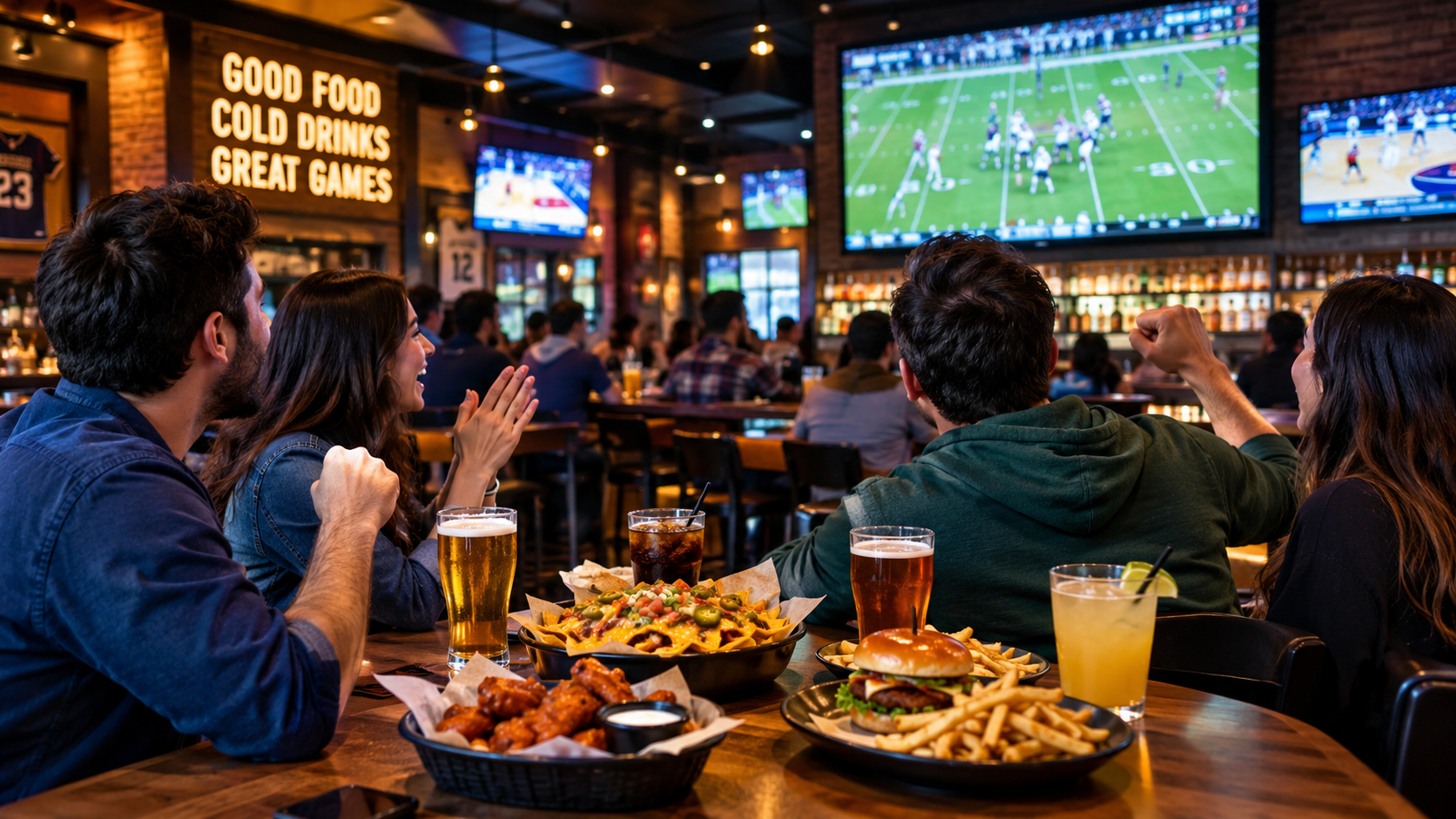
Sports bars have also evolved into versatile social destinations. People visit them to catch up with friends, meet new people, celebrate special occasions, and enjoy a relaxed meal without the formality of traditional dining. Even those who do not follow sports closely can appreciate the lively environment, diverse menus, and sense of community these venues create.
Understanding this broader appeal explains why sports bars remain popular in a competitive dining and entertainment market. Their success comes from combining several experiences under one roof while giving customers a reason to return long after a particular season ends.
What Makes Sports Bars More Than Just Places to Watch Games?
The defining feature of a sports bar is its ability to combine live entertainment with food, beverages, and social interaction. Large televisions and game-day broadcasts may attract the initial crowd, but other elements often determine whether customers stay, spend, and come back.
An Atmosphere That Makes Every Game More Exciting
Watching a close game at home can be enjoyable, but experiencing it with a crowd creates a different kind of energy. Cheers after a touchdown, collective reactions to a last-minute shot, and friendly debates over controversial calls make the experience feel more engaging.
The atmosphere is particularly important during major sporting events. Playoff games, championship finals, and rivalry matchups give people a shared reason to gather. Even strangers can quickly find common ground when they support the same team or react to an unexpected play.
For example, a group of coworkers might choose a sports bar to watch a football game after work. The shared experience gives everyone something to discuss beyond office responsibilities, making the outing feel both entertaining and social.
Food That Encourages People to Stay Longer
Food plays a major role in the popularity of sports bars. Customers generally want dishes that are flavorful, convenient to share, and easy to enjoy while following the action on screen.
Popular choices include chicken wings, burgers, nachos, loaded fries, sliders, sandwiches, and other casual favorites. These dishes are practical for groups because they can be ordered in different combinations and shared without interrupting the conversation.
Menu variety also matters. Vegetarian options, lighter meals, salads, and dishes that accommodate common dietary requirements help make a venue accessible to a wider audience.
A well-designed menu supports the entire experience. Instead of leaving after one drink or a single quarter of a game, customers may order dinner, try an appetizer, and stay through the final whistle.
Drinks and Conversation Go Hand in Hand
Beverages contribute to the relaxed atmosphere that defines many sports bars. Depending on the venue, customers might choose craft beer, cocktails, soft drinks, mocktails, or nonalcoholic beer.
The important factor is choice. A venue that offers appealing nonalcoholic options can welcome designated drivers, younger adult customers, and people who simply prefer not to drink alcohol.
Drinks also provide a natural starting point for social interaction. Friends can catch up over refreshments, coworkers can unwind after a busy day, and fans can discuss the game between plays.
How to Make the Most of a Sports Bar Visit
A little planning can make the difference between a crowded, stressful evening and an enjoyable outing. These practical steps help individuals and groups get more value from their visit.
Step 1: Choose the Right Venue for the Occasion
Not every sports bar offers the same experience. Some focus on high-energy game-day crowds, while others provide a quieter environment suitable for dinner and conversation.
Consider what matters most to your group. If watching a specific matchup is the priority, look for a venue that regularly broadcasts that sport. If the occasion is a birthday or casual get-together, seating arrangements, menu variety, and noise levels may be more important.
Checking the event schedule and the venue’s policies beforehand can also prevent disappointment.
Step 2: Plan Around Peak Hours
Major games often create sudden increases in customer traffic. Arriving shortly before kickoff or the opening tip may leave limited seating, particularly when several popular teams are playing.
For important matchups, consider making a reservation if the venue accepts them. Larger groups should confirm whether everyone can sit together and whether any minimum spending requirements apply.
If you prefer a more relaxed atmosphere, visiting during an earlier meal period or choosing a less prominent game may offer a better experience.
Step 3: Order Strategically for Your Group
Sharing food can make a group outing easier and more affordable. Rather than ordering several large individual meals immediately, start with a few appetizers and add main dishes according to everyone’s appetite.
For example, four friends might share wings and nachos before ordering burgers or sandwiches individually. This approach allows everyone to sample different items without committing to more food than they need.
Ask about portion sizes, spice levels, and ingredients when necessary. Planning orders around the group’s preferences can reduce food waste and help everyone enjoy the meal.
Step 4: Make Room for Socializing
Although the game may be the main attraction, a good outing should leave room for conversation. Choose seating that allows your group to interact comfortably, especially if some guests are less interested in the sport.
Avoid letting disagreements about teams or players dominate the evening. Friendly competition adds character to the experience, but respectful conversation keeps the atmosphere welcoming.
Common Mistakes That Can Affect the Experience
Even a promising venue can disappoint when expectations are unrealistic or basic details are overlooked.
Arriving too late for a major game: Popular events can fill tables quickly. Arriving early or arranging a reservation reduces unnecessary waiting.
Choosing a venue without checking its broadcasts: Some establishments prioritize particular leagues or sports. Confirm that the event you want to watch will be available before making plans.
Ignoring the menu and dietary needs: A venue may have an impressive screen setup but limited food choices for certain guests. Reviewing the menu helps avoid awkward last-minute decisions.
Underestimating noise levels: Loud crowds are part of the appeal for some visitors but can make conversation difficult for others. Consider your group’s preferences before choosing a high-energy location.
Overspending without a plan: Appetizers, drinks, and additional orders can add up quickly. Setting a reasonable budget and checking menu prices beforehand helps everyone manage costs comfortably.
Practical Tips for Sports Bar Owners and Visitors
The same factors that create an enjoyable visit also explain what separates successful sports bars from forgettable ones.
For owners, visibility is essential. Customers should be able to follow the action without constantly turning away from their seats. Screen placement, sound management, comfortable seating, and reliable broadcasts all contribute to customer satisfaction.
Service quality matters just as much. During busy games, staff need efficient ordering processes, clear communication, and a practical system for handling large groups. Long waits can undermine even the most exciting atmosphere.
Menu consistency is another important consideration. Customers appreciate familiar favorites prepared well, reasonable portions, and options that suit different tastes. Seasonal specials or game-day food bundles can add variety without making the menu unnecessarily complicated.
Visitors can improve their experience by following a few simple habits:
-
Check game times, reservation policies, and parking arrangements before leaving home.
-
Agree on a spending budget with friends, especially for longer events.
-
Order responsibly and arrange a safe ride home if consuming alcohol.
-
Treat staff and fellow customers respectfully, even when the game becomes intense.
-
Consider weekday specials or less crowded hours for a more relaxed meal.
Sports bars that balance entertainment, hospitality, and food quality are more likely to develop loyal customers. Visitors, meanwhile, benefit most when they choose a venue that fits the occasion rather than focusing exclusively on screen size or team popularity.
Conclusion: The Lasting Appeal of Sports Bars
Sports bars remain popular because they offer more than a place to watch a game. They combine casual dining, drinks, shared excitement, and opportunities to connect with friends, family, coworkers, and fellow fans. Their flexible atmosphere makes them suitable for everything from spontaneous dinners to major sporting celebrations.
The best experiences come from a combination of thoughtful planning, good food, comfortable surroundings, and welcoming service. Whether someone arrives to support a favorite team or simply enjoy an evening out, a well-run sports bar can turn an ordinary gathering into something worth repeating.
Ultimately, the appeal extends beyond the scoreboard. It is the combination of entertainment, hospitality, and human connection that keeps people coming back.