
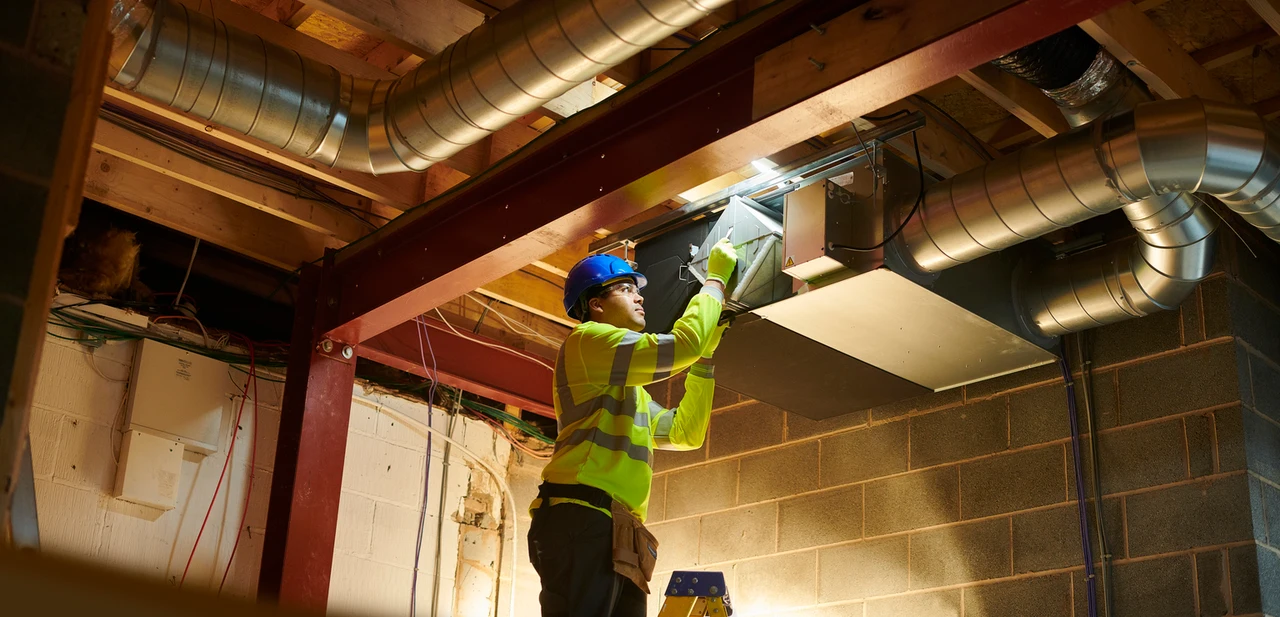
You have an air duct cleaning quote in one email and an HVAC tune-up offer in another. Both mention airflow, but they cover different work. Air duct cleaning removes deposits from the ducts and other components specified in the quote. HVAC maintenance checks how the heating and cooling equipment operates and may include cleaning or adjustments to keep it working properly.
When choosing between air duct cleaning and HVAC maintenance, start with what prompted the call. If the AC cools poorly or water keeps collecting near the indoor unit, book an HVAC evaluation. If you’ve found heavy debris inside a duct or signs of pest activity, start with an inspection of the affected area. If the equipment is working normally and you’re preparing for summer or winter, ask for a seasonal maintenance checklist.
Air duct cleaning vs. HVAC maintenance at a glance
| What to compare | Air duct cleaning | HVAC maintenance |
| Typical scope | Cleaning specified supply ducts, return ducts, registers, and grilles. A broader system-cleaning package may also include the blower or indoor coil. | Checking the filter, blower, coils, condensate drainage, and system operation. Some packages include cleaning or adjustments. |
| When to consider it | An inspection finds excessive deposits, debris coming from supply registers, or contamination that warrants cleaning. | You want a seasonal equipment check or need an HVAC technician to evaluate poor cooling, drainage problems, or another operating symptom. |
| What to confirm in writing | Which duct runs and openings are included, how the provider will access them, and whether equipment components are included. | Which items will be inspected, cleaned, or adjusted, and whether troubleshooting, replacement parts, or repairs cost extra. |
What an air duct cleaning quote should spell out
Supply ducts carry heated or cooled air to rooms through registers. Return ducts carry room air back to the equipment through return grilles. A quote that says “vent cleaning” can leave you guessing whether the provider will clean the covers, the duct runs behind them, or both. Ask for the written scope to identify the supply and return sides, the openings included, and any sections the crew can’t access.
If you request a quote from Green Wood Air Duct Cleaning, describe what you found and where. For example, “There’s loose debris behind the floor register in the remodeled bedroom” gives the provider a specific area to inspect. Ask to see photos or video of any buildup that supports the proposed work. The condition and location of the material help determine how much of the system needs attention.
What an HVAC tune-up usually checks
An HVAC technician may check the filter’s condition and fit, inspect the blower that moves air through the system, and look at the indoor and outdoor coils. The indoor coil collects moisture during cooling, so a cooling-season visit can also include checking the drain pan and condensate line. An operating check may cover thermostat response, startup and shutdown, and whether the system runs as expected through a cycle.
Ask how the contractor defines a check. Looking at the coil is one task. Cleaning it is another. The same distinction applies to a condensate line. A technician may verify that water flows through it during a routine visit, while clearing a blockage or replacing a damaged part may require separate work.
How to compare quotes that both mention a blower or coil
Blower and coil cleaning can appear in both a broad duct-cleaning package and an HVAC maintenance proposal. If both quotes say “coil service,” ask each provider to write down the component, the action, and whether the price includes it. “Inspect the indoor coil” and “clean the accessible indoor coil surface” describe different work. Apply the same test to “blower service.” Find out whether it means checking operation, cleaning the assembly, or making an adjustment.
Which service should you book in these situations?
The house cools poorly or the drain keeps backing up
Book an HVAC evaluation if the system runs for long periods without reaching the thermostat setting, or if water repeatedly collects near the indoor unit. For poor cooling, the technician can check airflow and equipment operation. For recurring water, they can inspect the pan, drain line, and condensate pump if the system has one. Ask whether the visit includes diagnosing the symptom and whether any repair requires a separate quote. A blocked condensate line calls for drainage work.
You find debris or signs of pests inside a duct
Ask the inspector to show you the material, where it sits, and how far it extends. A pile behind one register may call for a different scope than deposits found in several branches. If you see nesting material or droppings, leave them undisturbed and have the suspected pest activity assessed. Ask whether there’s an active entry point and whether the duct was damaged. Address the pest source and any needed repairs, then use the inspection findings to decide what cleaning is appropriate.
The system works and you want seasonal service
Ask for the checklist before booking. Confirm whether it covers your equipment type, whether the filter and condensate drain are checked, and which cleaning tasks are included. Ask whether the technician will run the system through a normal cycle and explain any findings before proposing extra work. If someone recommends duct cleaning during the visit, ask what they observed inside the ductwork and how that finding supports the recommendation.
Match the written quote to the problem you want solved
Before approving work, look for three details in writing. The quote should name the affected component, state what the provider will do to it, and identify any work priced separately. If an inspection finds excessive debris inside your ducts, Austin-area homeowners can contact Green Wood Air Duct Cleaning about residential duct cleaning and ask for a written scope based on those findings.